
 01
01Lower Material Costs
Print More for Less: Use plastic pellets instead of relying exclusively on expensive filament, potentially reducing material costs for large-scale projects and high-volume production.
AURA3D · FGF Printers
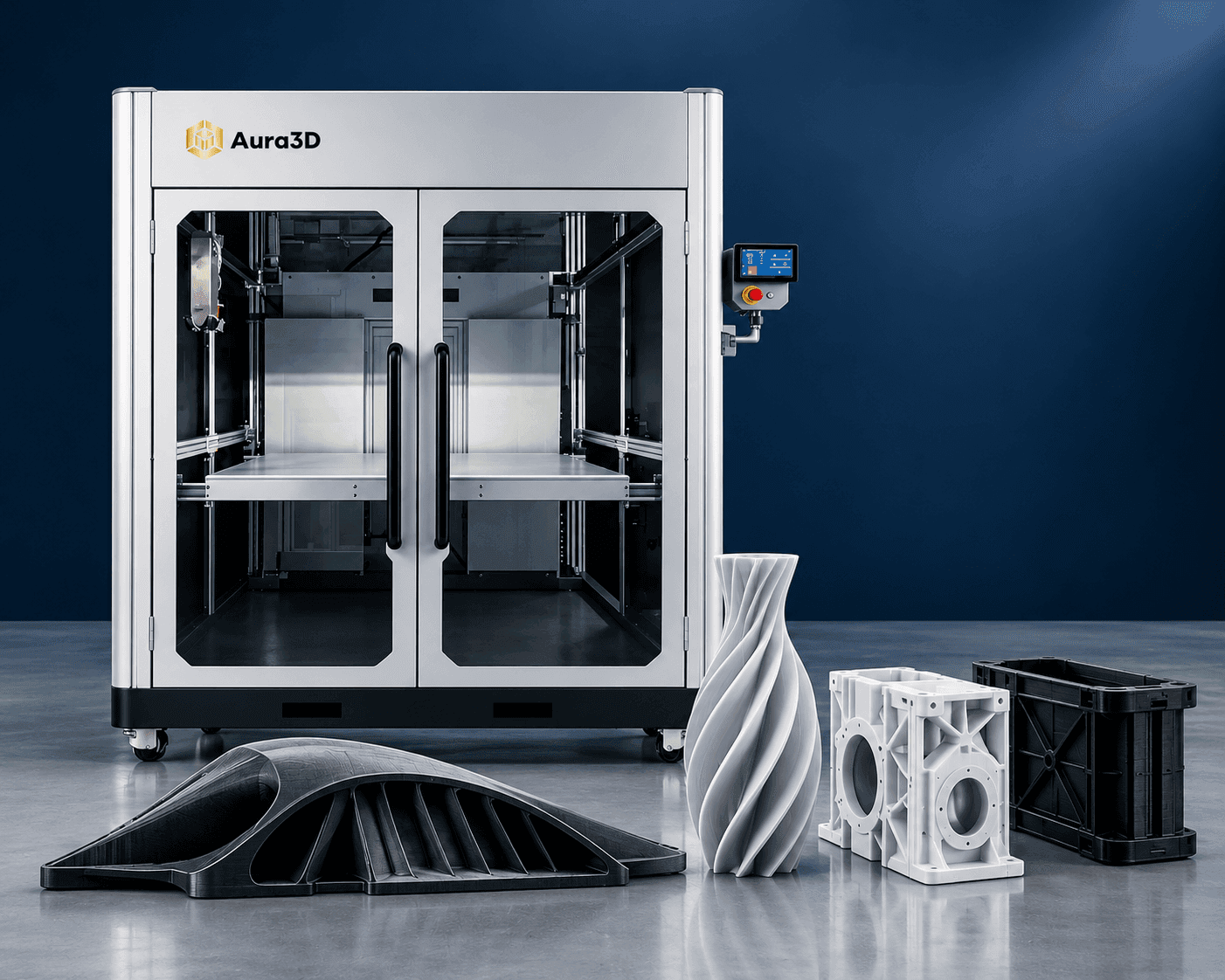
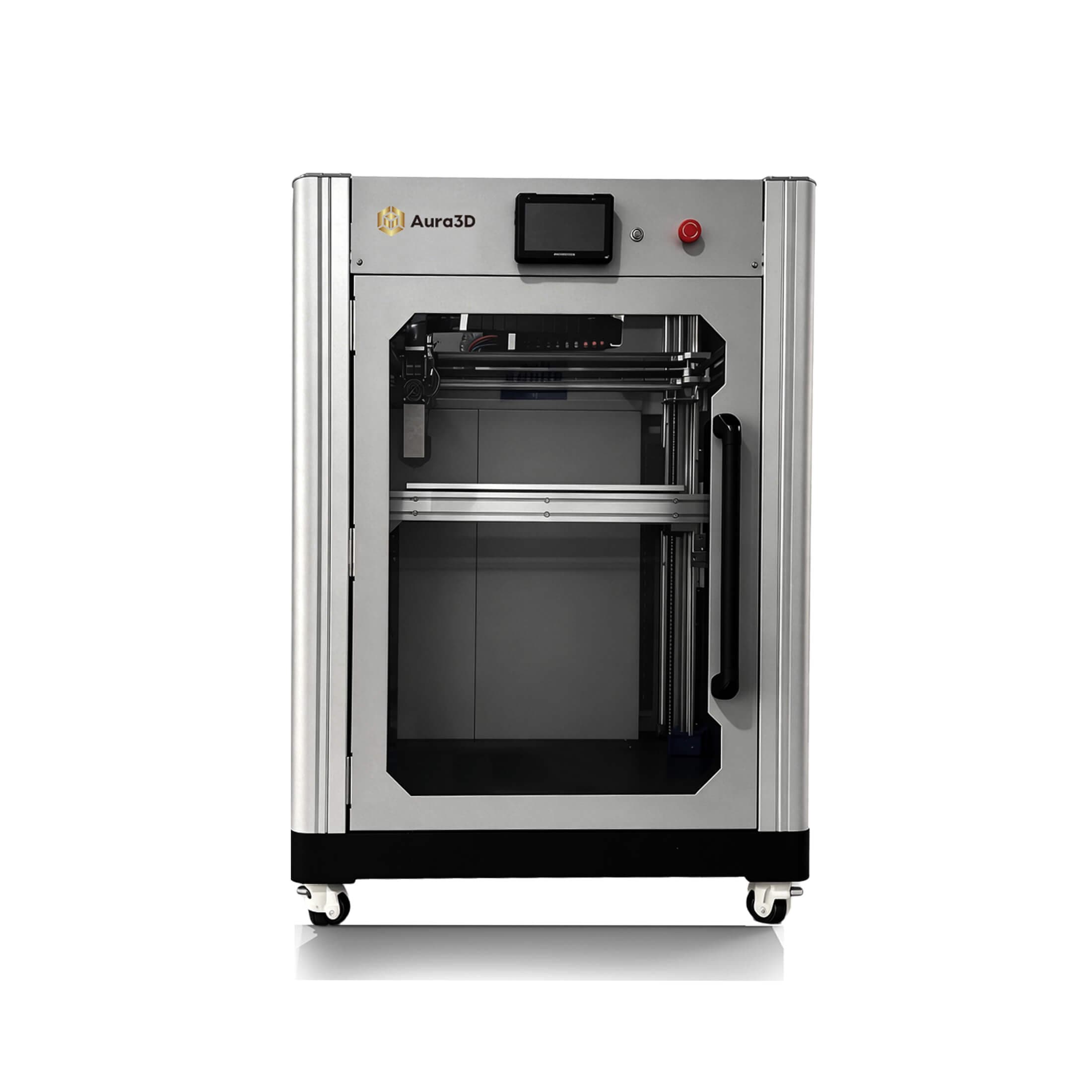
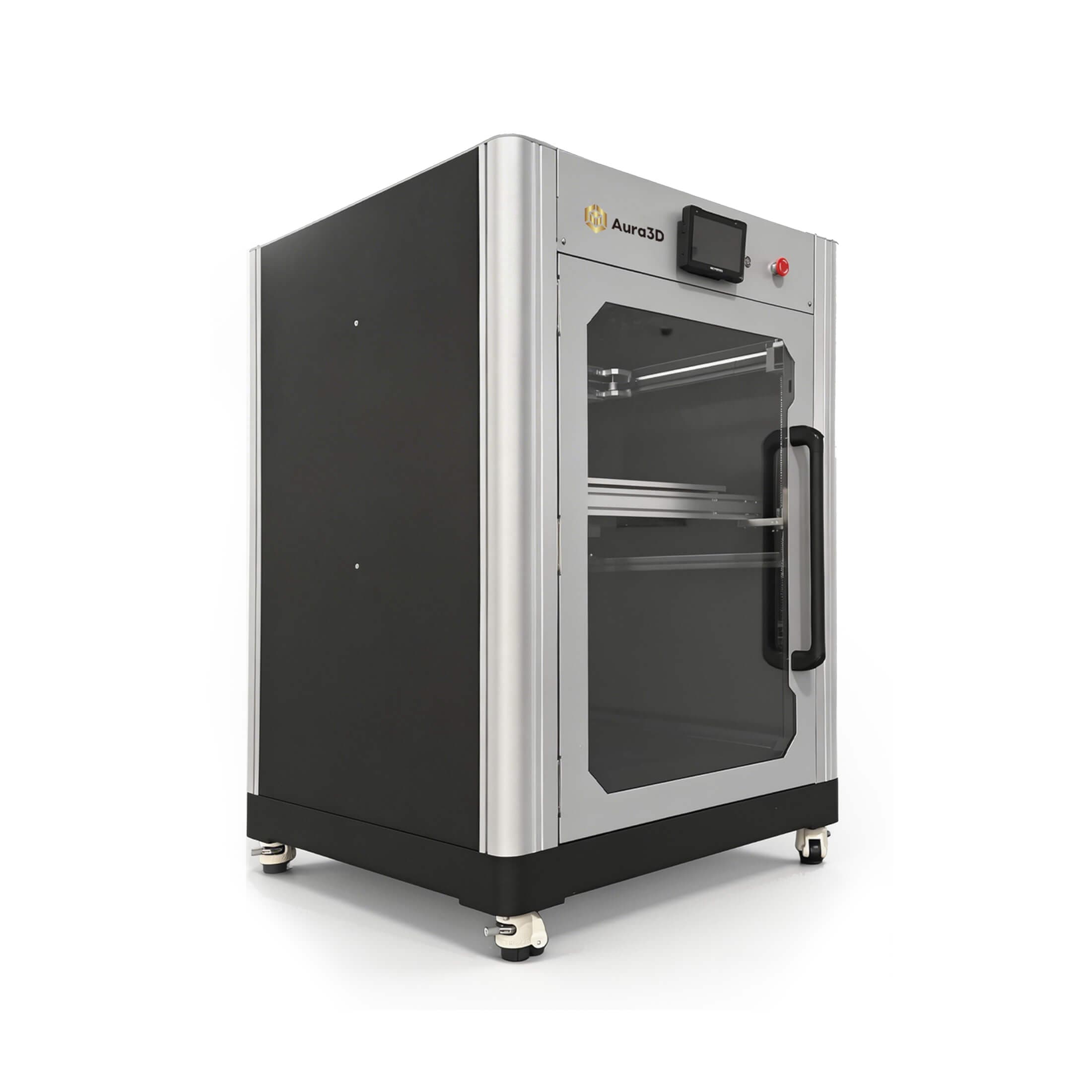
The Aura3D A12 FGF Pellet 3D Printer combines large-format printing capabilities with cost-effective pellet-based extrusion, enabling designers, engineers, and manufacturers to create oversized prototypes and functional components while reducing material costs and expanding design possibilities.
1 / 4Price on request
Quoted for your market and configuration, with delivery and set-up included where it applies.
Request Kenya pricingEquipment and printed goods share one cart and one checkout.
Big Ideas. Industrial Scale. Smarter Manufacturing.
Imagine creating architectural components, oversized prototypes, custom furniture, and industrial parts without the material costs and limitations often associated with conventional filament-based 3D printing. The Aura3D FGF Pellet 3D Printer brings this vision closer to reality through large-format Fused Granulate Fabrication (FGF) technology.
Designed for professionals who need to manufacture bigger, explore new geometries, and optimize production costs, Aura3D transforms thermoplastic pellets into functional, three-dimensional objects. By processing plastic granules directly rather than relying exclusively on pre-manufactured filament, pellet-based printing can significantly reduce material costs for suitable applications, particularly when producing large parts.
From Digital Concepts to Industrial-Scale Creations
The Aura3D FGF platform opens new possibilities for architects, designers, engineers, manufacturers, and product developers. Create architectural models, custom furniture, tooling, molds, display installations, functional prototypes, and large-format components with greater freedom over size and form.
Its high material-deposition potential makes it especially attractive for applications where conventional desktop printers may be too small or too slow. Depending on the machine configuration, material, and print settings, FGF technology can help accelerate the production of large components while reducing dependence on costly filament supplies.
A Smarter Approach to Digital Fabrication
Pellet-based additive manufacturing offers opportunities to work with compatible thermoplastics in a more economical format. With the appropriate material selection and process controls, manufacturers can explore new production methods, improve material efficiency, and develop customized products with less reliance on traditional tooling.
For businesses looking to move beyond prototyping into larger-scale fabrication, Aura3D provides a pathway toward more flexible, digitally driven manufacturing.
Powering the Future with Umbaji by KW
At Umbaji by KW, we believe the future of design and manufacturing lies in combining advanced technology, material efficiency, and creative freedom. Our focus is to help architects, engineers, designers, educational institutions, and manufacturers discover how large-format pellet 3D printing can transform their workflows.
From initial concept development to digital modeling and fabrication, we aim to connect innovation with practical applications across the United States, Africa, and beyond.
Whether you are exploring industrial prototyping, architectural fabrication, customized manufacturing, or large-format creative projects, the Aura3D FGF Pellet 3D Printer offers an exciting opportunity to think bigger and manufacture differently.
Aura3D FGF: Bigger Builds. Smarter Materials. Industrial Possibilities.
Design. Sustainability. Future.
The machine, crated
With its standard tooling, cabling and starter consumables.
Commissioning on site
Assembled, levelled, calibrated and run to a first accepted part.
Operator handover
A working session with whoever will actually run it, not a manual.
Support after the invoice
Consumables, spares and a person who has seen this machine before.
Buying the machine is one route. These divisions run this class of equipment as a service, so you brief the outcome instead of operating it.
6 things worth knowing
01Print More for Less: Use plastic pellets instead of relying exclusively on expensive filament, potentially reducing material costs for large-scale projects and high-volume production.
 02
02Build Bigger: Produce oversized prototypes, architectural components, furniture, molds, and industrial parts that exceed the build capacity of many conventional desktop 3D printers.
 03
03Accelerate Production: FGF (Fused Granulate Fabrication) technology deposits material at high rates, making it suitable for large parts that would take significantly longer on typical filament-based printers.
 04
04Unlock New Possibilities: Explore compatible thermoplastic pellets such as PLA, PETG, and other engineering polymers, depending on the machine configuration and material requirements.
05Manufacture More Efficiently: Optimize material usage through additive manufacturing, producing near-net-shape components with less waste than many subtractive manufacturing processes.
06Turn Ideas into Products: From architectural forms and custom furniture to tooling, molds, and functional prototypes, pellet-based printing offers a cost-conscious route to large-format digital fabrication.